It was the Friday before the mission was set to begin—and the books were still on a ship off the coast of Valencia in the Mediterranean. Delayed by war, rerouted around Africa, stuck at a port before Spain’s Easter week when almost no one would be working. The publishing house had told them plainly: there was no chance the books would arrive in time. And yet, on Sunday evening at ten o’clock, they arrived.
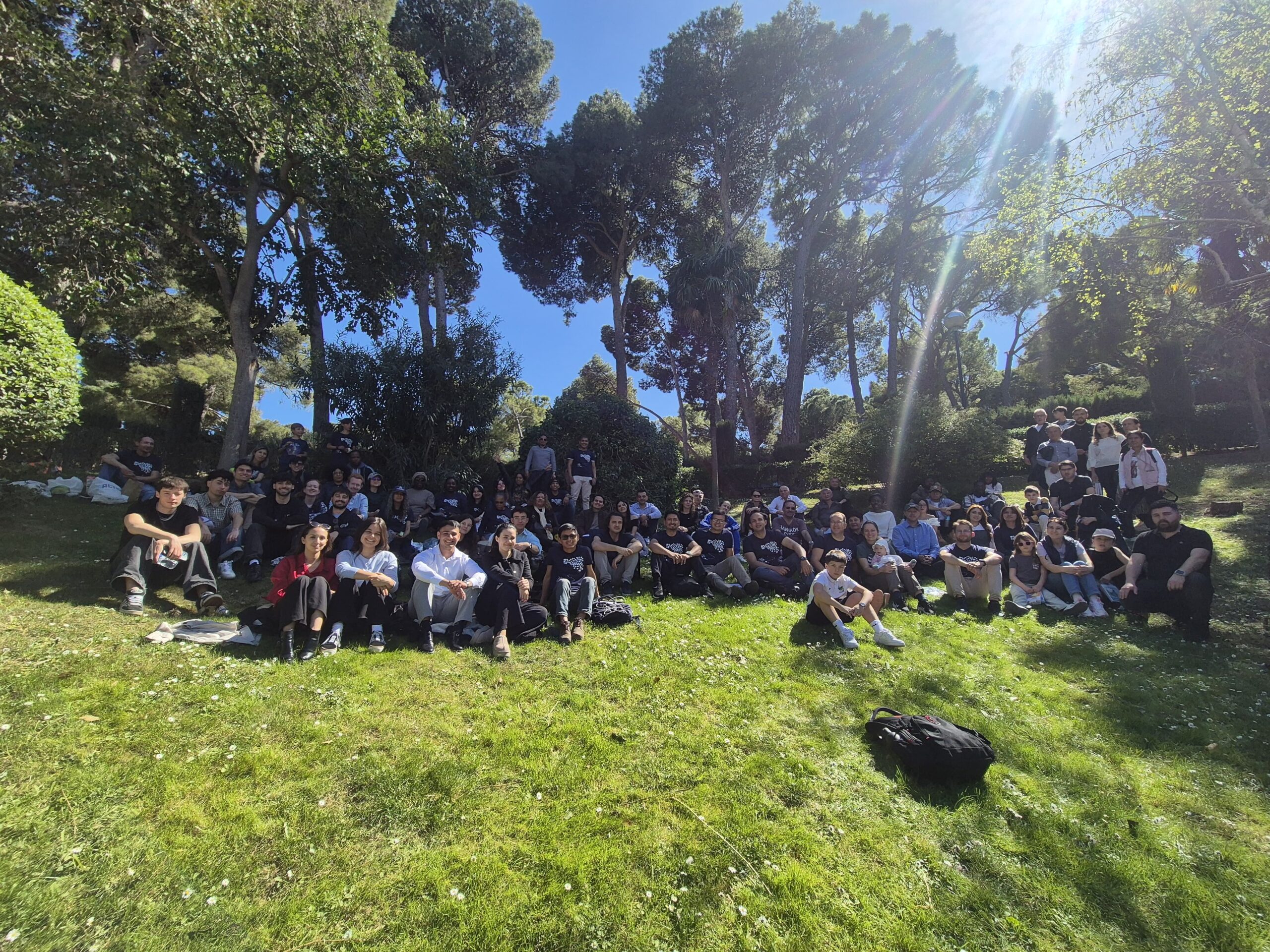
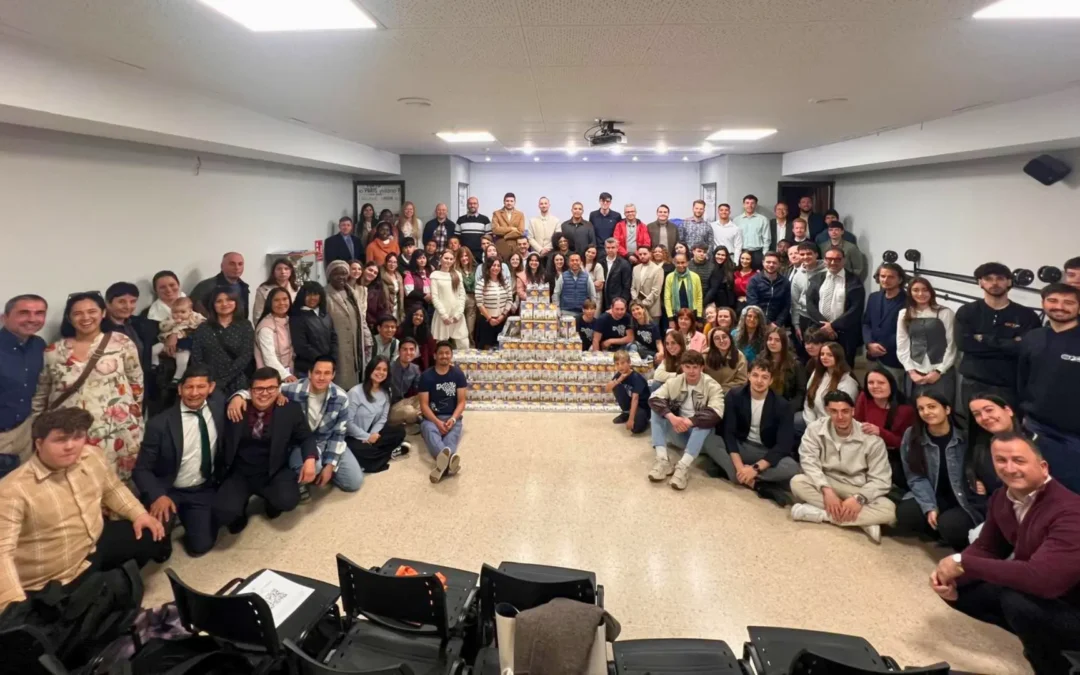
That moment of last-minute deliverance set the tone for everything that followed in Zaragoza during the week of March 31 through April 4, when a team of 50 to 60 missionaries—young people from across Spain, Europe, and beyond—took to the streets of this historic city to share the gospel one doorstep at a time. Led by Streams of Light International, in partnership with Impact Europe and the Spanish Union youth department, they distributed nearly 18,000 copies of The Great Controversy, received 231 requests for Bible studies, prayed with hundreds of strangers, and witnessed what they describe as undeniable miracles.
Three team members from Streams of Light—Oleg Lotca, President of Streams of Light International; Dietmar Butscher, Director of Evangelism for Streams of Light Europe; and Samuel Peralta, Director of Industries for Streams of Light International—sat down to share what they saw and what they believe God did in Zaragoza.
Against All Odds: The Miracle of the Books
Every mission trip begins with logistics, and no mission has ever required more faith and endurance than this one.
The plan had been to bring tens of thousands of books from a publishing house in East Asia—a massive shipment that would form the backbone of the entire outreach effort. But the ship carrying the books was rerouted. It took the long way around Africa. And then, arriving at the port in Valencia, it ran headlong into another obstacle: Semana Santa, Spain’s Holy Week, when much of the country takes time off from work.
“We called the publishing house on Thursday afternoon,” recalls Dietmar Butscher. “They told us the books were still on the ship. So we made a Plan B.” They placed an emergency order from a Spanish publisher, rushing to get it submitted before 2 p.m. so the books could arrive by Friday. Then that delivery was delayed too.
Oleg Lotca shares: “On Friday—the Friday right before the mission trip started on Monday—we received a call saying the books would not get there until Wednesday or Thursday.” That would have meant losing three or four days of outreach.
Samuel Peralta, who was part of the planning and had been praying, describes the atmosphere on the ground: “We got there, we started planning and prepping. The books were still being transported.” The team had even begun arranging to have someone drive a vehicle to the port to pick up the books on Sabbath or Sunday if needed.
And then—on Sunday evening—the phone rang with the news they had prayed for. The original shipment from East Asia had made it. The books arrived at the warehouse in Zaragoza. Adventist volunteers drove through the night and unloaded them into vans so everything would be ready first thing Monday morning.
“We were all going to our knees, praising the Lord,” Butscher says. “The books arrived faster than Plan B.”
By Monday morning, the team was packing books by the boxful. The mission trip would begin on time.
Opening Doors: A City of Closed Buildings
Zaragoza is not a city of front porches and open yards. It is a city of apartment blocks—tall, dense buildings where entry is controlled by intercoms and coded locks. When the local churches first heard about the outreach plan, their counsel was cautious: it would be very difficult to get into those buildings. They weren’t sure it could be done at all.
Samuel Peralta describes the buildings: “Ninety to ninety-five percent of the territory is old buildings—four, five, six floors, two to three apartments per floor. And the other five percent are gated communities.” The team prayed over maps of the city, asking God for a breakthrough in the territory. Then they went out.
“We started noticing that most of these building doors were just open,” Peralta shared. “They just pushed on the door and the door opened. Only God can do something like that.” Over the course of the week, the team gained access to more than ninety percent of all the apartment buildings they approached.
For the buildings that required ringing intercoms, they used a phrase that, in light of it being Easter week, proved remarkably effective. “We said: ‘We have something special for the community this Easter week. Can you please open the door?'” Butscher explains. “And almost all the doors opened.” The team had prepared for this through ten days of prayer before the trip began, including a prayer walk through the streets of Zaragoza led by Jesus for Asia the week before.
During those morning prayer sessions—extended to two hours each day, from six to eight a.m.—one image kept returning to the missionaries: Joshua standing before the walls of Jericho. The answer then, as now, was prayer.
“Prayer opens doors,” says Butscher—and he means that in more than one sense.
Encounters on the Doorstep
Once inside the buildings, the distribution work—and more miracles—took place. Each missionary carried a backpack filled with copies of The Great Controversy and health magazines. Each one had been trained to offer the book as a gift, to ask if they could pray with whoever answered the door, and to listen. As volunteers put this into practice, they began encountering remarkable Divine appointments.
Gabriella’s Story
Dietmar Butscher was going door to door alone when he knocked on one apartment and a woman answered—opening it only a crack, phone in hand, a dog barking at her feet. She shook her head. “No, no, I’m not interested.” He offered the book. She took it, but seemed ready to close the door.
Then he asked if there was anything he could pray for her.
“When this woman heard that I wanted to pray with her, something happened in her,” he says. “I didn’t understand it. I was astonished. The door opened—wide—and she invited me in to her library.”
There on the shelves of the woman’s library were books from the Adventist Church. A Bible. She began to cry. She had been part of the church once—but had drifted away. An old friend called her regularly, urging her to return. And now a stranger had appeared at her door during Easter week, asking to pray with her.
“She said it three times,” Butscher recalls, “‘This is a sign of God. This is a sign of God. That you are at this door—this is a sign of God.’ We knelt down and prayed together.” He was able to get her contact information and she expressed a desire to receive Bible studies and return to church.
We ask that you pray for this woman—called Gabriella here to protect her privacy—that God would guide and bless her as she studies, and that her faith would be greatly strengthened.
Joanna in the Park
On the last afternoon of outreach, Butscher met Joanna—a self-described agnostic—in the Parque Grande de Zaragoza. She was from Peru, working now in Madrid, and had come to Zaragoza for the weekend. She was intelligent, curious, and a little guarded.
What Butscher did not know yet was what had happened that very morning. Joanna’s father, who had recently converted from Catholicism to Protestantism, had called her and urged her to find a church, to give faith a try. “He told her it would help her,” Butscher says.
Hours after that phone call, Butscher walked up to her in the park, handed her a copy of The Great Controversy and a health magazine, prayed with her, and invited her to an evening program. She came—this agnostic woman who had no plans for that afternoon, who had just spent the morning talking about God with her father.
“She said it herself: this is not a coincidence,” Butscher says. “These are the moments where you feel you are part of something bigger.” He was able to get her contact, and they are still in touch.
A Mother’s Tears
At another apartment, Butscher met a young mother with a small child. Butscher’s Spanish was imperfect—not quite strong enough, he felt, to express the depth of what he wanted to say. But he offered to pray. She agreed.
“I opened my eyes afterwards and she was crying,” he says. “Tears were falling from her eyes. Her child was looking up at her, not understanding what was happening.” He pauses. “It wasn’t me. It was God who was using me. I’m not able to pray in a way that moves people like that—but somehow, God was touching her through a broken prayer in a language I’m not fully fluent in.”
Victor at the Cathedral
Samuel Peralta’s most memorable encounter came near El Pilar—the magnificent cathedral at the heart of Zaragoza, one of the most visited churches in Spain. Outside the cathedral, a man named Victor was handing out tracts. He was an evangelical Christian, doing his own small form of outreach.
“We exchanged a tract for a book,” Peralta says, laughing at the memory. That exchange sparked something. By Sabbath, Victor had shown up at the mission base—and went out with the team, going building to building, ringing doorbells, declaring, “We have a gift for the community.”
“He was on fire,” Peralta says. “Just going through the buildings, knocking on doors.” The following Sabbath, Victor went to church, and spoke with the pastor about beginning Bible studies on the 28 fundamental beliefs.
A Seed Planted at 30,000 Feet—and at a Construction Site
Samuel Peralta’s testimonies from the mission began even before he arrived in the country. On the flight to Madrid, the woman seated next to him struck up a conversation. At the end of the flight, he gave her a copy of The Great Controversy. She was on her way to Benicàssim to see her husband.
We ask that you pray for her as well.
Then, still in Madrid before making his way to Zaragoza, Peralta spotted a construction worker in the street. He stopped to ask for directions to the metro—and ended up giving the man, José, a book and praying with him right there on the sidewalk.
“The idea we had heard was that Spain is very difficult, and that people are not receptive,” he says. “That was the first encounter. And it was very pleasant.” It set the tone for everything that followed.
Miracles of Protection and Provision
The stories of divine appointments and divine protection are more numerous than can be included. Missionaries were miraculously kept from illness, in spite of the cold weather. Conditions were ripe for an outbreak of sickness that could have gutted the team.
“By day one and two, people were already getting sick,” Butscher recalls. “But somehow, after one or two days, everybody was good. Nobody got sick from the cold—even though it was windy and really tough out there, and nobody was sleeping very much.”
Oleg Lotca echoes this: “God miraculously protected the team. We have seen God intervening in a powerful and miraculous way.”
The group’s numbers were themselves something of a miracle. Two weeks before the mission trip, only 16 people had registered. Then God opened an unexpected door: the I Will Go project, a youth evangelism gathering at Sagunto Adventist College, took place just one week before the mission trip. Oleg Lotca had been invited to give a seminar there—and the seminar was well attended. Many of those who heard him came directly from that program to Zaragoza.
“Finally, we had 50 to 60 people going out every day,” Lotca says. “God had just the people we needed.”
By the Numbers: What God Did in Six Days
The growth across the six days of outreach tells its own story. On Day One, 12 Bible study interests were recorded and 1,292 books distributed. By Day Five, 55 Bible studies had been registered in a single day, with 3,996 books placed in hands across the city.
When the mission closed, the total count stood at:
- 17,960 copies of The Great Controversy distributed
- 231 Bible study interests recorded
- 60 Bible study appointments confirmed within the first week alone
- Hundreds of prayers offered with residents—at least 231 confirmed
- 10 visitors who came to the city specifically to observe the evangelization
- 200 missionaries trained in total, most from local Zaragoza churches
- 40 local church volunteers who packed books every day
- 15 volunteers handling cooking, cleaning, and logistics
- 182 attendees at each evening evangelistic program
- 700 attendees at the closing Sabbath program—approximately 300 of whom were non-Adventist
In a post-event survey, 90% of participants rated the experience at the highest level—and 82% said they would invite friends to a similar event in the future.
“We also did a survey and found that people were touched the most by the outreach,” Butscher says—not by lectures or theory, but by going out and doing. “Learning mission by doing mission.” One participant wrote: “I was amazed that in a short time I was able to talk with a person, give a little Bible study, hand them a book, pray with them, and get their contact for ongoing Bible studies.” That, Butscher says, is exactly what Streams of Light exists to produce.
The People Who Made It Possible
Behind these numbers are person who God used is a powerful way. Samuel Peraltashares about the local churches of Zaragoza and the pastors who led them.
“Pastor Rubén—he’s the pastor of the Torrero Seventh-day Adventist Church in Zaragoza—was there constantly,” Peralta says. “Helping us with directions, helping us use public transportation, reloading bus cards so we could get around the city. He was picking up people from the train station at midnight, at three in the morning. You name it, he was there.” The Remnant Church also provided two vans that ran every day—loading books at the warehouse and driving out to resupply the missionaries in the field, so the team never had to interrupt outreach to haul boxes.
Peralta, on behalf of Streams of Light, also specifically thanks Pastor Aaron del Pozo, Pastor Magdiel Avram, Pastor Miguel Angel Gabarre, Pastor Jay Rosario, and others who embraced the project. “These are people who were key players in the success of what happened,” he says. “We could not have done it without them.”
Dietmar Butscher marvels at the dedication of those same pastors: “I seldom saw something like this. The pastors got up at three o’clock in the night to pick up people from the airport. They were cleaning. They were organizing. Their involvement was incredible.”
Oleg Lotca traces the partnership further back—to a single individual at the union level who believed in the project early and helped push it through. “At the union level, there was concern,” he says. “But one person who truly believed in it pushed it through.” He also honors the local church boards, who ultimately opened their doors wide. And he thanks the team from I Will Go at Sagunto College, whose gathering immediately before the mission trip sent a wave of fresh volunteers to Zaragoza.
A Movement, Not a Moment
All three from the Streams of Light team note that Zaragoza was not an endpoint. It was a beginning.
Groups of young people from Barcelona, Valencia, and multiple churches across Zaragoza have expressed a desire to keep going—to continue distributing books and doing evangelism on an ongoing basis. In response, Streams of Light International and the Spanish Union have committed to giving each of those emerging groups 500 books as a startup gift to help them sustain the work.
“The fire was ignited,” says Butscher.
A second mission trip is already being organized—this one to Ibiza, a Spanish island off the Mediterranean coast, planned for June.
“God is truly expanding this work quickly to all of Europe,” says Oleg Lotca. “We have seen miracles in an incredible way. Now the local members have gained confidence that this work can be done—and that this work should be done.”
Samuel Peralta remarks on the impact it had for him personally: “I came back with energy. I came back with a lot of enthusiasm. Because you see that what for man seems impossible—for God, it is not. There is nothing impossible for God. This victory belongs to Him.”
On the Doorstep of Something Larger
Dietmar Butscher closes with an image that stays with him—the scene every morning before the missionaries went out into the city:
“Everybody came with their backpacks. Everybody was a little bit excited, nervous—what will happen today? Everybody was filling their bags, groups were forming.’
“There was a certain point of fear in everybody. But everybody was overcoming that fear through the Lord. And then we went out.”
He thinks of the 70 disciples sent out by Jesus two by two—who came back overflowing with joy, and recounting their experiences, and of what Jesus counsels them.
“It’s not about those numbers,” Butscher says, “It’s about being written in the book of heaven. It’s not us who did this. It’s God who did all those miracles. Because it could very easily have been different—no books, no access to buildings, people getting sick. But by the grace of our God, this was an event that was very fruitful.”
He adds—for all the missionaries who went out, and for all the people in Zaragoza who opened a door to find a stranger holding a book and asking to pray:
“We feel in those moments that heaven and earth are meeting. It’s like a staircase from heaven going down to the earth. And it’s really beautiful.”