
This article is based on a devotional message given by Bill Krick, Associate Director for Publishing Ministries at the General Conference of Seventh-day Adventists.
There is a difference between hearing what God has done and experiencing His power for yourself.
Judges 2 describes a generation of Israelites who served the Lord throughout the days of Joshua and the elders who outlived him. These were men and women who had seen the great works God had done for Israel. They knew the stories of the Jordan River, Jericho, and the miraculous deliverances God had given His people.
But eventually another generation arose.
“And also all that generation were gathered unto their fathers: and there arose another generation after them, which knew not the Lord, nor yet the works which he had done for Israel.” Judges 2:10.
They may have grown up hearing the stories, but they had not experienced those works for themselves.
That distinction should cause us to think seriously about the spiritual experience of the church today, particularly our young people. It is possible to grow up surrounded by truth, attend church, know our history, and hear testimonies of what God has done for others—and still lack a personal experience of seeing God work through us.
One of the greatest ways to develop that experience is through service.
When we step into the work God has given us to do, we quickly discover our need of Him. We find ourselves in situations where we do not have all the answers. We meet people we could never have planned to meet. We face conversations that require wisdom beyond our own. We pray because we genuinely need help, and then we begin to see God answer.
There are things about God that we may never fully learn until we are actively working with Him.
That helps explain an unusual passage in Judges 3. After Israel failed to completely drive out the nations around them, God allowed some of those nations to remain so that a generation that had not experienced the earlier conflicts of Canaan could learn what it meant to face battle. This was only so that the generations of the children of Israel might be taught to know war, at least those who had not formerly known it.
The lesson is not that war itself was desirable. The experience gave Israel an opportunity to discover something about God. They would face circumstances beyond their own strength and have to depend upon Him for deliverance.
The same principle applies to gospel work. A comfortable, predictable Christian life may provide few occasions for us to recognize just how desperately we need the Lord. But when we enter His service, that changes.
Literature evangelism provides those opportunities again and again.
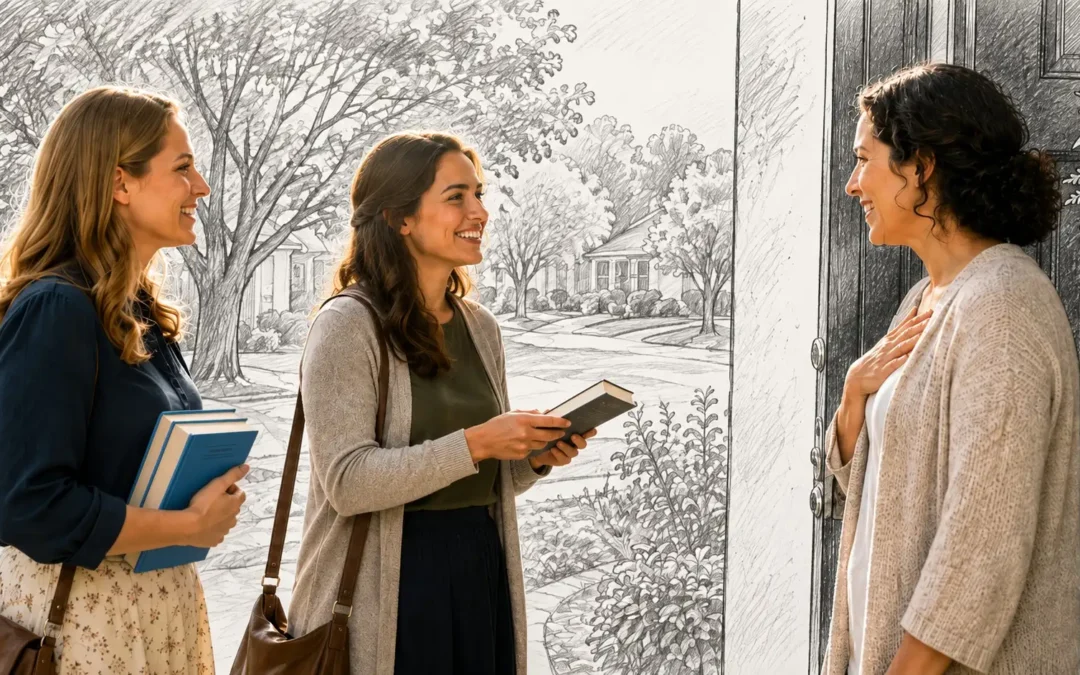
A person approaches a door not knowing who will answer. A conversation begins unexpectedly. Someone shares a burden. A question is asked that the worker could never have anticipated. Suddenly, what may have begun as simply placing literature becomes a divine appointment.
Those experiences change the worker as much as they can change the person at the door.
This is why outreach cannot be viewed merely as a method for reaching other people. It is also part of the discipleship of the church itself. When believers participate personally in the work, they begin to see that God is not distant. They see that He prepares hearts, directs conversations, answers prayers, opens doors, and supplies wisdom at exactly the moment it is needed.
At a Streams of Light outreach in Flagstaff, Arizona, that reality was visible among the church members participating in the work. As people went into the community, they could sense God working with them and through them. They were not simply hearing someone else’s testimony of divine appointments. They were having those experiences themselves.
This is especially important for young people.
During literature evangelism work in California in 2025, an 18-year-old worker met a woman at the door who shared that she had struggled with methamphetamine addiction for 20 years but had now been clean for a year. The woman had become a Christian and loved God, but she admitted that she struggled to understand the Bible.
For the literature evangelist, that was a wonderful opportunity.
The young worker offered her free Bible studies, and the woman was interested. As they continued talking, she learned they were Seventh-day Adventists and began asking questions about the Sabbath. She had recently looked at a calendar, noticed that Saturday was the seventh day, and wondered why most churches worshiped on Sunday.
As their conversation progressed, the young worker shared how she had recently been studying The Desire of Ages and reading about Christ’s experience in Gethsemane and His willingness to give His life for humanity. As she began sharing what she had been learning about Jesus, the woman started to cry. Soon the young worker was crying too. Before leaving, they joined hands and prayed together.
She walked away from that home with joy.
Later, when asked what she probably would have been doing if she had stayed home rather than joining the outreach, the young woman laughed. She said she probably would have been scrolling on her phone.
Instead, she had spent that time watching God work.
This is one of the great needs of the church. We need a generation that knows more than the stories of what God did through someone else. We need young people, families, and church members who know what it means personally to labor together with God.
The experiences gained in service become evidence that God is real, that He is near, and that He is still working in human lives. When we find ourselves dependent upon Him and then see Him intervene, our faith becomes more than theory.
There are victories we will never experience if we never enter the battle. There are divine appointments we will never witness if we never go. And there are things about God we may never learn until we begin working with Him.
The challenge, then, is not to back away from opportunities to serve, especially opportunities that place young people directly in the work. Give them the training they need, put them alongside experienced workers, and send them into the field. Give them opportunities to pray, speak with people, distribute truth-filled literature, offer Bible studies, and discover for themselves what it means to depend upon God.
The next generation should not have to know God’s works only through the stories we tell them.
They can know Him by experience.